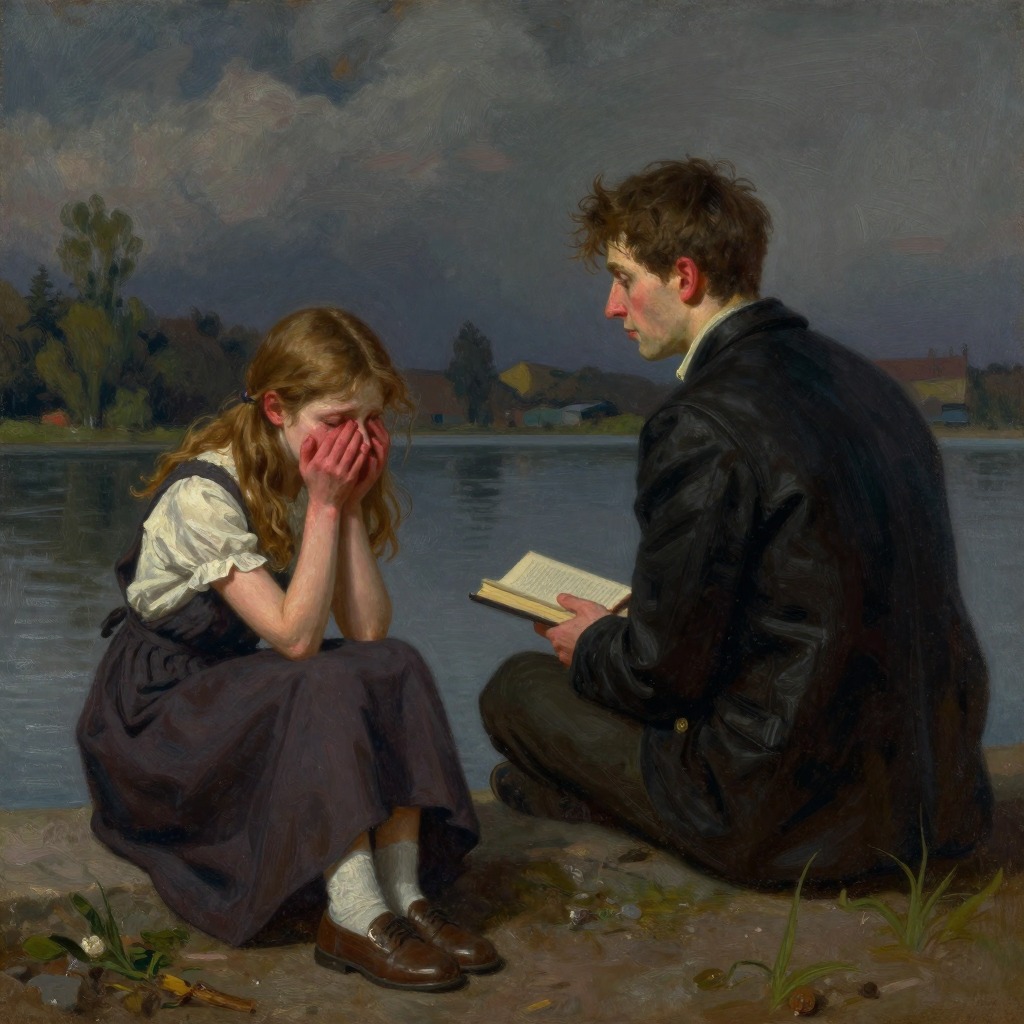
Canal Embankment
The Canal Embankment in Petersburg is the central physical and emotional stage of Dostoevsky's "White Nights." It is the site where the Dreamer first encounters Nastenka, where their four nights of conversation unfold, and where the story's crucial meetings, confessions, and farewells take place. More than a mere setting, the embankment becomes a symbolic space of solitude, romantic possibility, and eventual heartbreak, a liminal zone between the Dreamer's isolated inner world and the possibility of genuine human connection.
Location and Atmosphere
The Canal Embankment is a remote part of Petersburg, where at ten o'clock at night one rarely meets a soul. The Dreamer describes his way home along this embankment, walking and singing, for when he is happy he hums to himself like every happy man who has no friend or acquaintance with whom to share his joy. It is here, leaning on the canal railing, that he first sees a woman — Nastenka — with her elbows on the rail, apparently looking with great attention at the muddy water of the canal. She wears a very charming yellow hat and a jaunty little black mantle. The Dreamer notices that she does not seem to hear his footsteps, and does not stir when he passes by with bated breath and loudly throbbing heart. The embankment is thus established as a place of quiet, solitary reflection, where the city's noise fades and intimate, unexpected encounters become possible.
The First Encounter and the Rescue
On the same embankment, the Dreamer hears a muffled sob and realizes the girl is crying. He turns, takes a step toward her, but hesitates, knowing that the exclamation "Madam!" has been uttered a thousand times in every Russian society novel. While he seeks a word, the girl comes to herself, looks round, starts, casts down her eyes, and slips by him along the embankment. He follows her, but she crosses the road. Then a chance comes to his aid: a drunken gentleman in evening dress appears on the same pavement, staggers, and begins to pursue the girl. The Dreamer, armed with his excellent knotted stick, crosses the street in a flash, and the obtrusive gentleman retreats. The Dreamer offers his arm to the girl, and she takes it without a word, still trembling with excitement and terror. This rescue on the embankment initiates their relationship, and the Dreamer blesses the obtrusive gentleman for the opportunity.
The Seat and the Appointments
The embankment contains a specific seat — "The Seat" — which becomes the designated meeting place for the Dreamer and Nastenka. On the Second Night, the Dreamer sits beside Nastenka on this seat and delivers his long, confessional monologue about the life of a dreamer. Nastenka listens, opening her clever eyes, and at the end presses his hand with timid sympathy. It is also on this seat that Nastenka reveals her own history: a year ago, on this very embankment, at ten o'clock, she and the Lodger sat together after their understanding, and he promised that upon his return from Moscow he would come directly to this spot. The seat thus becomes a locus of memory and promise, a place where past and present converge. On the Third Night, the Dreamer waits for Nastenka on the seat, but she does not come because of rain. On the Fourth Night, he arrives at nine o'clock and finds her already there, standing as she had been that first time, with her elbows on the railing. It is here that she learns there is no letter from the Lodger, and here that the Dreamer finally confesses his love. After her emotional acceptance, they walk along the embankment in a state of delirious happiness, laughing and crying, until the Lodger himself appears and Nastenka rushes to him, giving the Dreamer a farewell kiss before disappearing with the Lodger from the Dreamer's sight.
Symbolic Significance
The Canal Embankment functions as a threshold between the Dreamer's fantasy world and the reality of human connection. It is the place where he steps out of his solitary, dream-filled existence and engages with another person in a real, consequential way. The embankment's remote, quiet character mirrors the Dreamer's own isolation, yet it also becomes the stage for the most intense emotional experiences of his life. The muddy water of the canal, which Nastenka gazes into when she is crying, suggests the murky depths of emotion and the uncertainty of the future. The embankment is also a place of recurrence: the Dreamer returns to it night after night, and it is where he later wanders aimlessly, sad and dejected, revisiting the memories of his happiness. In the end, the embankment remains as a permanent landmark of a fleeting, transformative moment — a "whole moment of happiness" that the Dreamer considers enough for the whole of a man's life.